The problem in one sentence
A supercar is a machine optimised for sustained high-speed airflow, and Kuala Lumpur at six in the evening provides no airflow, no speed and no relief from 34-degree ambient heat with eighty percent humidity. Almost every way you can damage one of these cars in this city comes down to that mismatch, plus a front splitter that sits closer to the ground than a kerb is tall.
None of it is difficult to avoid. It just requires knowing what the car is doing underneath you, which nobody tells you when you collect a rental in most places. So here is what is actually happening.
Why dual-clutch gearboxes hate stop-start traffic
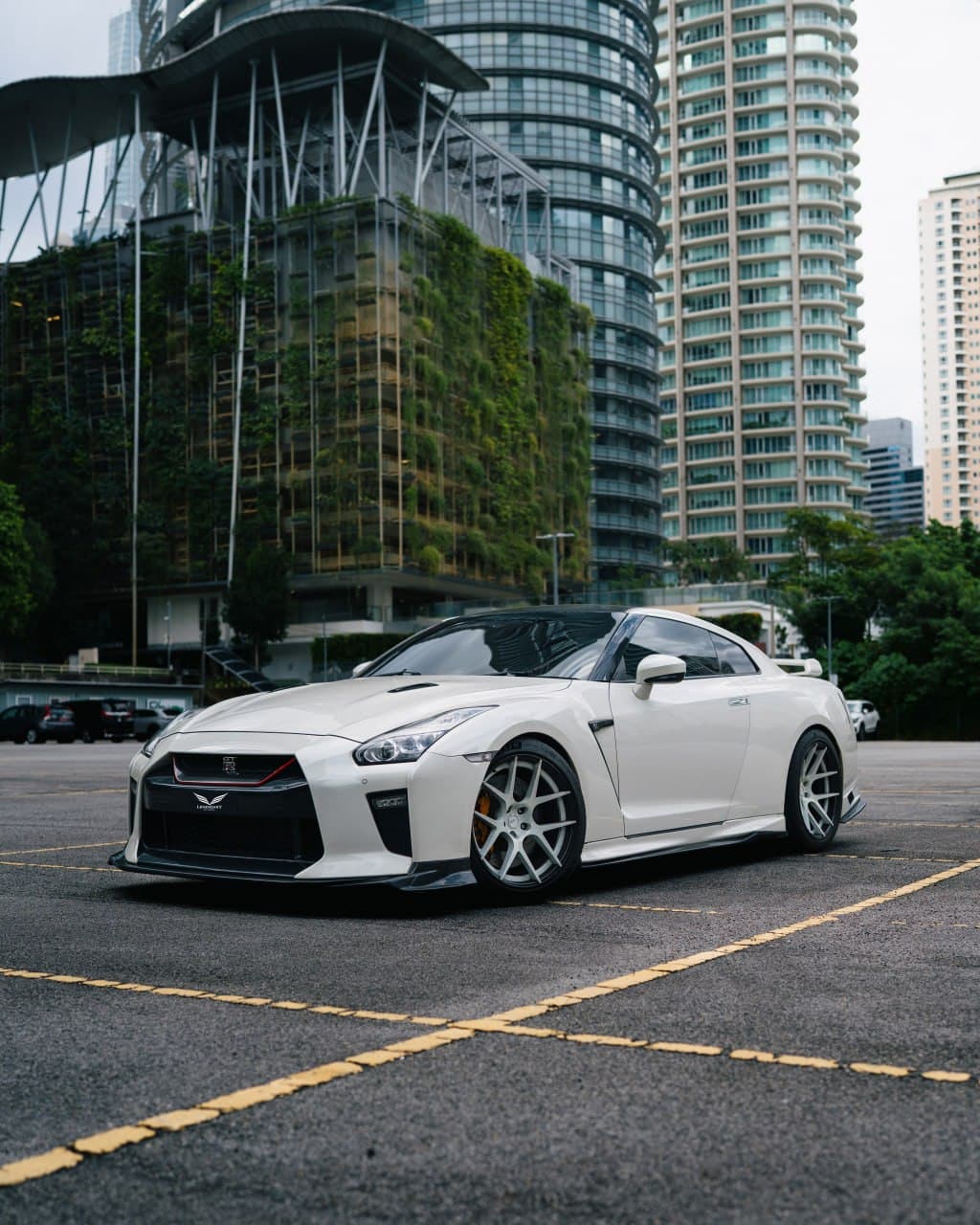
Nearly every performance car in our fleet uses a dual-clutch transmission — the Huracán's seven-speed, the GT3's PDK, the GT-R's rear-mounted six-speed. A dual clutch is essentially two manual gearboxes sharing a housing, one handling odd gears and one handling even, each with its own clutch pack. Shifts are fast because the next gear is already engaged and the system simply swaps which clutch is closed.
The weakness is creeping. A torque converter automatic can sit stationary in gear all day because the fluid coupling slips harmlessly and the transmission cooler handles the heat. A dual clutch has no torque converter. To move the car at three kilometres an hour, it has to partially engage a dry or wet clutch pack and hold it there in a state of controlled slip. Slip generates heat. Heat is the enemy of clutch friction material and of the hydraulic fluid actuating it.
In European traffic at 18 degrees this is a non-issue. In a KL jam at 34 degrees with no airflow through the underbody and an engine radiating heat into the same space, transmission temperatures climb steadily and the car will eventually protect itself by disengaging drive or throwing a warning. That is not a fault. That is the gearbox saving itself, and it is entirely preventable.
- Mechanism
- Two clutch packs, no torque converter
- Failure mode
- Heat from sustained slip
- KL ambient
- 32–35 °C, no underbody airflow
The four habits that keep it alive
First: leave a gap. Two to three car lengths in a jam means you roll forward at walking pace once every thirty seconds instead of creeping continuously. Rolling with the clutch fully engaged generates no heat at all. Creeping generates it constantly. This one habit does more than the other three combined.
Second: never hold the car on the throttle. On an incline — a basement ramp, a hill start on Jalan Raja Chulan — the instinct in a powerful car is to balance it on the accelerator. In a dual clutch that means deliberately slipping the pack against gravity, which is the single hottest thing you can ask it to do. Use the brake, let the hill-hold function take the strain, and only apply throttle once you intend to move.
Third: leave it in full automatic in traffic. Manual mode with paddles in stop-start conditions means you will hold gears longer than the software would, and the software's calibration for clutch protection is better than your judgement about it. Save the paddles for the Karak.
Fourth: if the car has a transmission temperature readout, look at it occasionally. If it starts climbing and staying up, get off the main road, find a stretch you can move on continuously for five minutes, and let airflow do its job. A supercar at 60 km/h for five minutes cools more effectively than twenty minutes stationary with the air conditioning at maximum.
- Leave two to three car lengths and roll, do not creep
- Brake on inclines — never balance on the throttle
- Full automatic in traffic, paddles on the open road
- Watch the transmission temperature and drive to cool it
Ramps, humps and the 105mm problem
A Lamborghini Huracán has around 105 millimetres of front clearance with the nose lift down. A typical Malaysian residential speed hump of the square-shouldered type presents an edge higher than that at a steeper angle than the splitter can accommodate. Approach it straight on and you will hear the noise every supercar renter dreads.
The technique is diagonal, slow, one wheel at a time. Approach at roughly thirty degrees to the hump at walking pace so the front left crests before the front right, which lets the car pitch across the obstacle instead of driving the whole nose into it. It looks ridiculous. It works, and it is what every owner does.
The nose lift is not optional and it is not for special occasions. Deploy it every single time you enter a car park, cross a hump, use a driveway apron or approach a ramp transition, and leave it up until you are back on flat road. It takes about three seconds and it raises the front axle by roughly 40 millimetres. Most systems will drop automatically above 40 or 50 km/h, so you cannot forget it in a way that matters.
Specific local hazards worth knowing: the ramp transitions between zones in the Mid Valley Megamall basement are sharper than the rest of the structure; most Mont Kiara condominium basements have ramps designed around a compact hatchback; and the driveway aprons in older Bangsar and Damansara Heights housing frequently have a lip at the pavement edge that will catch a splitter on the way in even though it cleared on the way out.
Approach a speed hump at thirty degrees at walking pace. It looks ridiculous. Every owner does it, and it is why their splitters are intact.
Rain, and the first ten minutes
Malaysian rain does not build. It arrives at full intensity, and the first ten minutes are the most dangerous period to be driving anything with wide tyres. Months of rubber deposit, diesel film and dust lift off the tarmac before the water volume washes them clear, producing a surface with a fraction of the grip of either dry or properly wet tarmac.
The response is straightforward: slow down significantly, select the softest drive mode available, leave every electronic aid fully switched on, and increase your following distance by a factor of three. Nothing about a supercar's chassis engineering helps here. A 305-section rear tyre displaces a lot of water but it also has a large contact patch to lift, and aquaplaning on standing water at 90 km/h will happen in a Huracán exactly as readily as in anything else.
Standing water is the other issue. KL floods fast and locally, and an underpass that was clear an hour ago can be half a metre deep. Do not drive into water you cannot see the bottom of. Water ingress into an engine is not an insurance claim, it is negligence, and on a V10 it is a catastrophic bill. Turn around. It is always the right call.
The unglamorous conclusion
The best way to enjoy a supercar in Kuala Lumpur is to not drive it in Kuala Lumpur very much. Use it at six in the morning when the roads are clear, use it on the Karak and the Guthrie where it can breathe, park it for dinner and walk, and treat the city centre between noon and ten at night as somewhere the car simply does not go.
Do that and everything above becomes theoretical. Do the opposite and you will spend a thousand ringgit a day sitting in a hot, wide, uncomfortable car with poor visibility, worrying about a gearbox temperature gauge. The car is not the problem. The itinerary is.